Gujarat in western India is home to one of the most celebrated Double Ikat traditions — Patan Patola. Seven centuries of unbroken heritage, preserved by a single family.
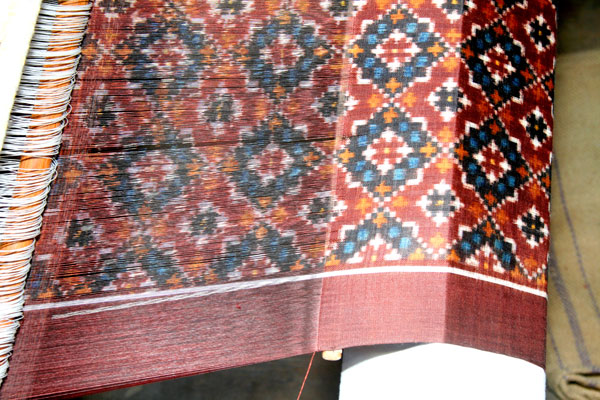
India has a rich and ancient heritage in fine textiles. Double Ikat Patola from the area of Patan in North Gujarat glorifies this heritage with its unique gem-like qualities — gorgeous colours, intricate designs and remarkable durability. It has no reverse side; both faces carry equal intensity of colour and design.
The peculiar quality originates in a very intricate technique of Tie & Knot dyeing known as the Bandhani Process, applied to the warp and weft separately before weaving begins.
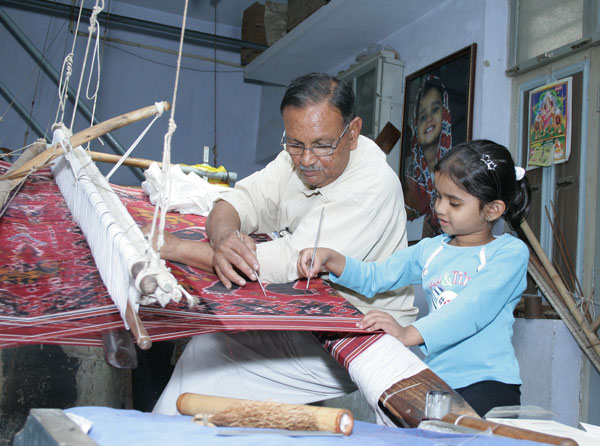
Legend indicates that in the 12th Century AD, King Kumarpal of the Solanki dynasty invited 700 families of Patola weavers from Jalna to settle in Patan. The Salvi family is one of them — this heritage art has been preserved for over 35 generations.
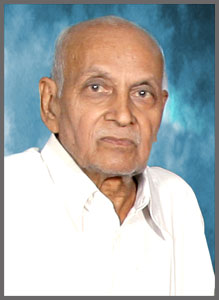
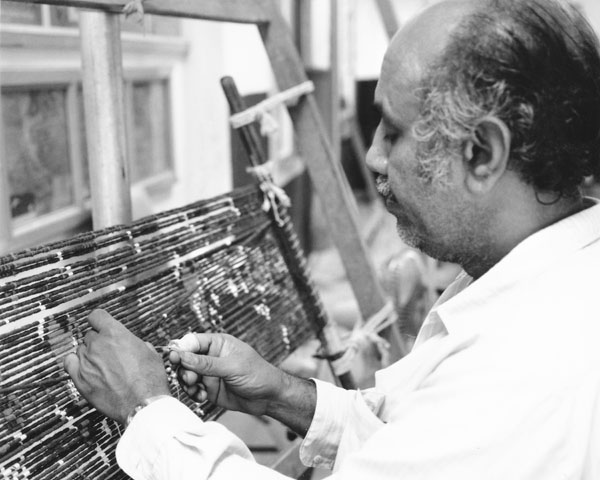
The skilled artisans who have dedicated their lives to preserving the supreme craft of Patan Patola.
A lineage of master weavers spanning over 35 generations — keepers of an irreplaceable tradition.
A meticulous journey that transforms raw silk into living art — each saree taking 5 to 6 months to complete.
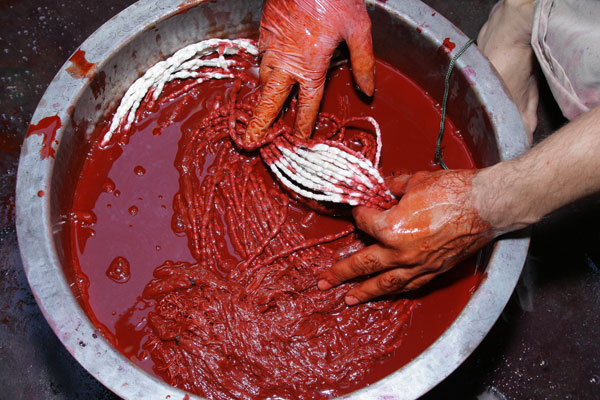
Warp and weft silk threads are tied separately with cotton thread on portions marked out in conformity with the proposed design. The tied portions remain unexposed to colour while dyeing. Tying, untying, retying and dyeing in different shades are the main features of this intricate process.
After completion of dyeing work of warps and wefts, the threads of the warp are put together in sequence on the loom so the design becomes visible. The weft threads are wound onto bobbins and kept in bamboo shuttles ready for the weaving process.
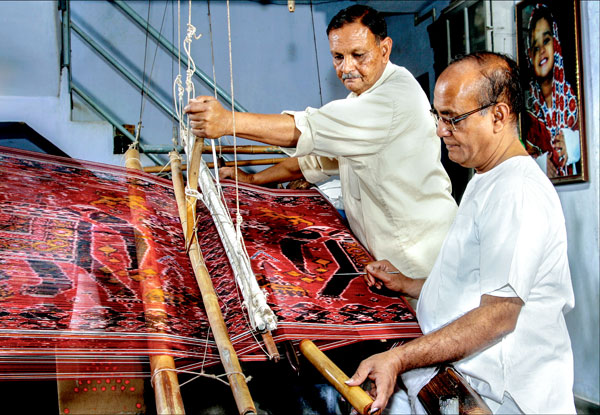
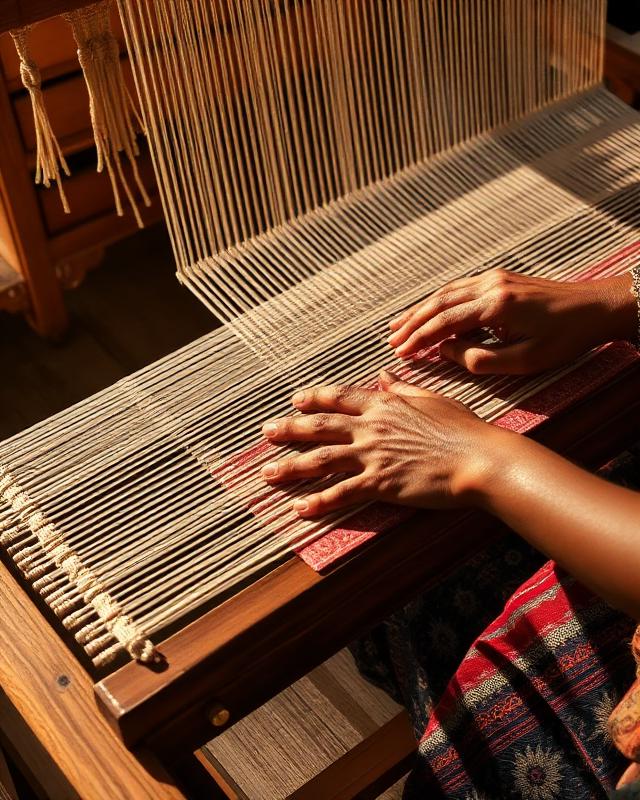
The Patola is woven on a primitive hand-operated harness loom made of rosewood and bamboo. The loom lies at a slant, with the left side lower than the right. Each weft thread is thoroughly examined and matched with the warp design pattern while weaving.
The tension of warp threads is released with a needle after every 8" to 10" of fabric is woven. Patola weaving requires exact positioning of warp and weft of similar colour to obtain perfect design and harmony — highly labour-intensive and requiring great skill.
It takes three to four months to prepare tie-dyed design on warp and weft for one 6-yard saree. Two weavers working together weave just 8" to 9" a day. Thus 4 to 5 persons take 5 to 6 months to complete one saree, depending on the intricacy of the design.
Like a symphony in silk — the Patan Patola is India's most complex, most sacred, and most breathtaking textile achievement.