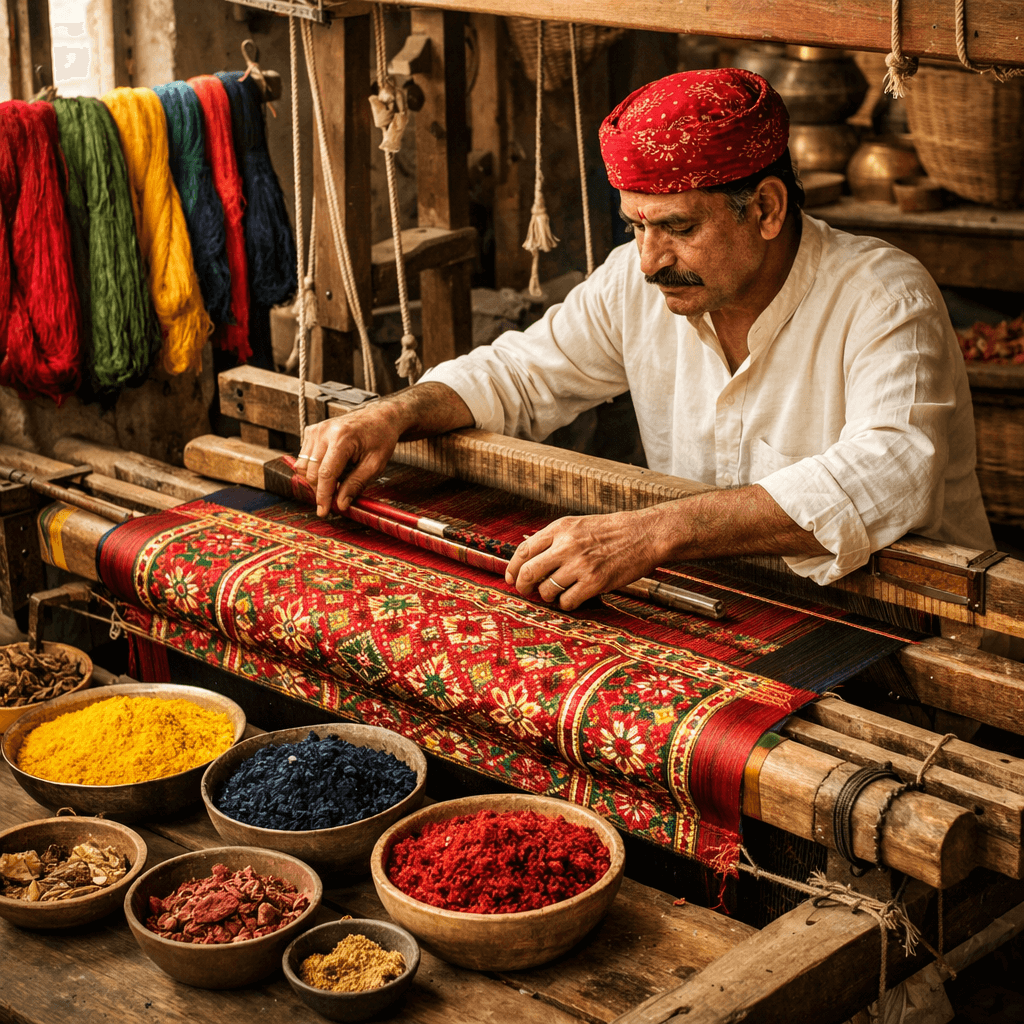
A Cloth of
Power & Devotion
Gujarat’s folk song “Chelaji Re, Mare Hatu patan thi patola mongha lavjo” — bring me the precious Patola from Patan — still echoes, keeping the cloth’s allure alive.
Patola is revered as a holy silk. In Thailand, Malaysia and Indonesia it was treasured as a power cloth that protected its wearer and was passed down to women as an heirloom of status.
Within Gujarati families it remains a blessing: gifted to daughters at marriage, worn on sacred occasions, and cherished as “ma’a” or “mawa” — cloth so perfect it felt created by God.
A Journey Across Centuries
Legend credits Solanki king Kumarpal with inviting master weavers to Patan, rooting the double ikat tradition in Gujarat.
Traveller Ibn Battuta records Patola being presented in royal courts — proof of its prestige far beyond Gujarat.
Patola travelled as prized gifts from Java and Sumatra to Samarkand, Basra, Damascus and Rome; merchants likened owning one to fine jewels.
Still woven by the Salvi family, Patola marks weddings and sacred rites, with natural-dye revivals honouring its origins.
“Padi patole bhat faatey pan phite nahin” — the design may tear, but its colours never fade.